

I Have a Question For You
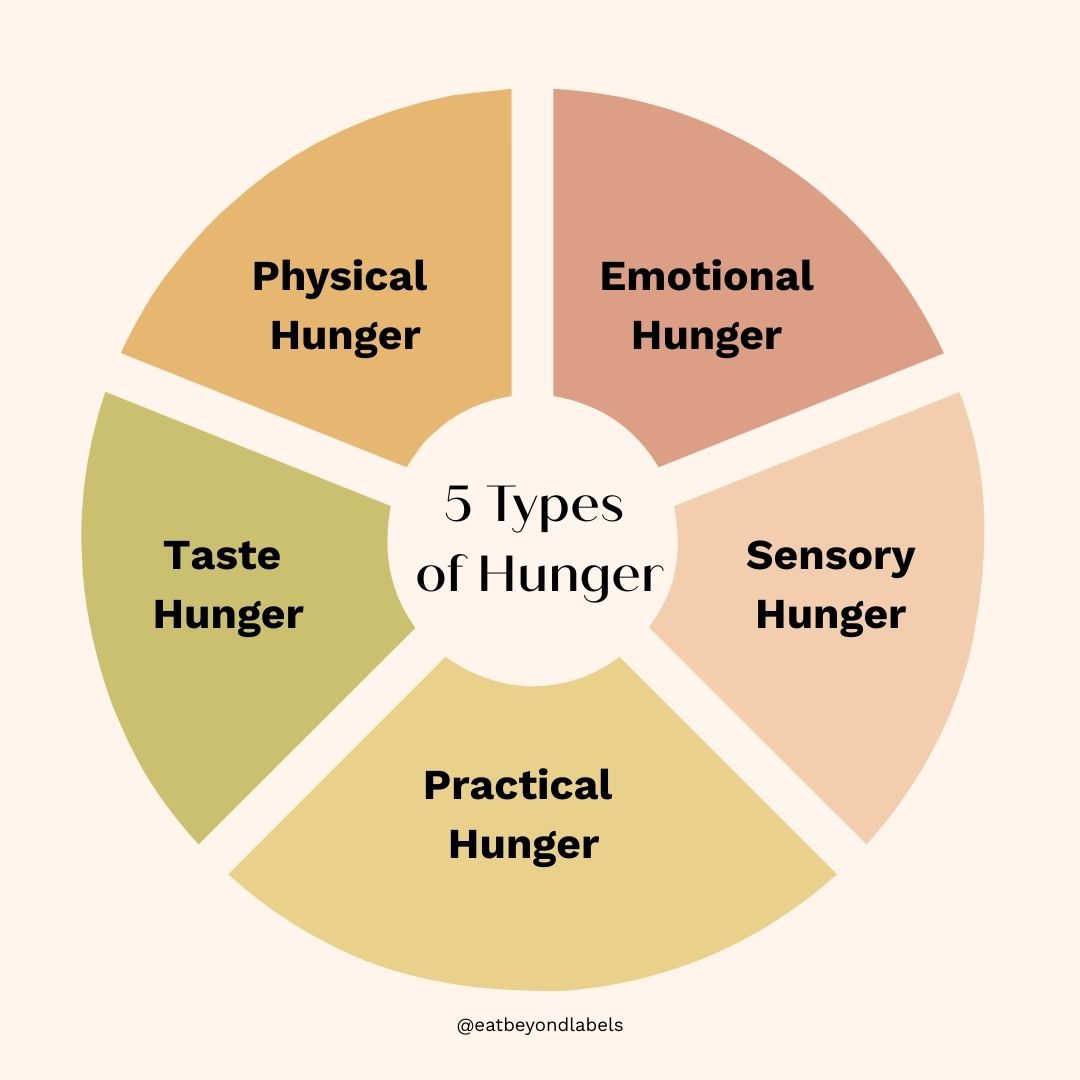
Have you ever found yourself halfway through a bag of chips, only to realize you weren’t actually hungry? Or maybe you’ve felt ravenous but unable to find anything that satisfies your craving. If so, you’re not alone. Many factors beyond physical hunger influence our eating habits. In this blog, we’ll explore 5 types of hunger and gain insight into how Intuitive Eating can improve the connection between our bodies and minds.

I’m Glad You’re Here!
I’m Christy, a Registered Dietitian passionate about helping folks explore the stories we tell ourselves around food and gently reconnect with the wisdom of our own bodies. I especially enjoy working with queer and trans folks, neurodivergent individuals, and anyone who’s felt sidelined by mainstream food and diet advice.
Disclaimer: While I am a Registered Dietitian (also known as “Registered Dietitian Nutritionist”), I am not your Registered Dietitian or familiar with your specific medical history. This content is for educational purposes only and is not professional or medical advice.
There’s More Than One Reason to Eat
The Intuitive Eating framework recognizes four main types of hunger: Physical, Emotional, Taste, and Practical Hunger. I like to add an extra option that is particularly common for neurodivergent folks called “Sensory Hunger” (read more below). Regardless of our identities and neurotypes, understanding these different types of hunger can help us all increase mindfulness and cultivate a healthier relationship with food.
Physical Hunger

Physical hunger is usually the easiest to recognize. It’s those frequent thoughts about food and the growling, gnawing sensation in your stomach that signals it’s time to eat. This type of hunger is driven by the body’s need to survive, and is your body’s way of communicating that it needs more energy to function.
Physical hunger can be influenced by many factors, including medications, hormonal changes, and certain health conditions. Read more about increasing physical hunger awareness here.
For neurodivergent individuals, understanding and responding to physical hunger can be particularly challenging. Folks with ADHD, autism, and/or sensory processing differences may find it challenging to recognize or respond to physical hunger cues. It’s important to listen to your body, but sometimes our bodies can send confusing signals. If this is challenging for you, working with a Registered Dietitian may be a helpful next step. Learn how I can support your journey here.
Emotional Hunger
Emotional hunger is less about physical needs and more about “the feels.” You know that craving for chocolate when you’re stressed, or the desire for comfort food when you’re feeling down? That’s emotional hunger, and it can be a temporary way of coping with difficult feelings.
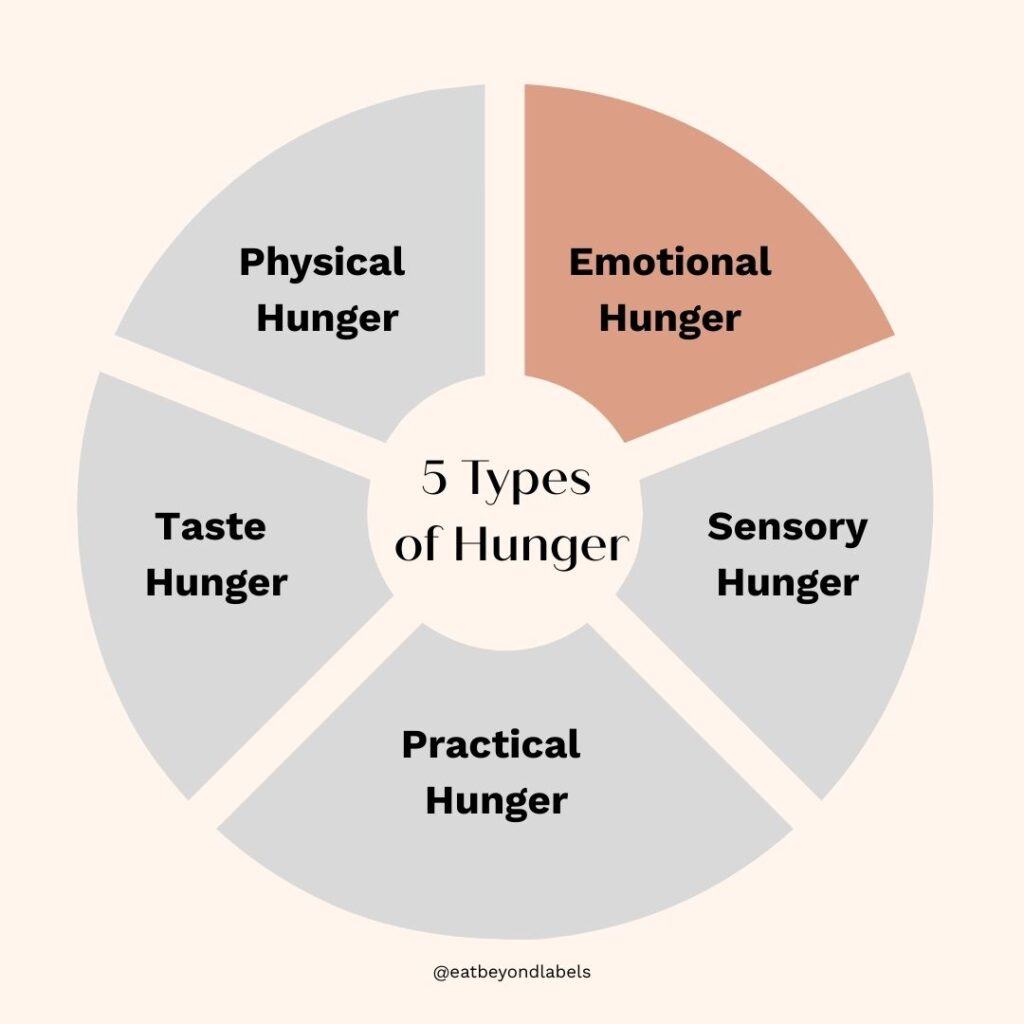
Emotional hunger, or “emotional eating,” can be challenging to distinguish from physical hunger. A trademark of emotional hunger is that it tends to come on quickly, has a lot of urgency, and is often directly linked to big feelings. It’s also possible to experience physical and emotional hunger at the same time. For example, if we are underfed and feeling hungry (or hangry, if you’re like me!), we may feel more anxious and be more prone to intense emotions than if we were adequately fueled.
There’s absolutely nothing wrong with honoring emotional hunger. Sometimes, a good grief release session with our favorite comfort food is exactly what we need to feel better. What’s important to remember is that food offers only a temporary comfort, and over time, relying on food alone may leave you feeling disconnected from other ways to care for yourself. If you can, consider partnering with a dietitian and/or therapist to build a broader “coping toolbox” so that food becomes just one of many ways you support yourself.
Taste Hunger
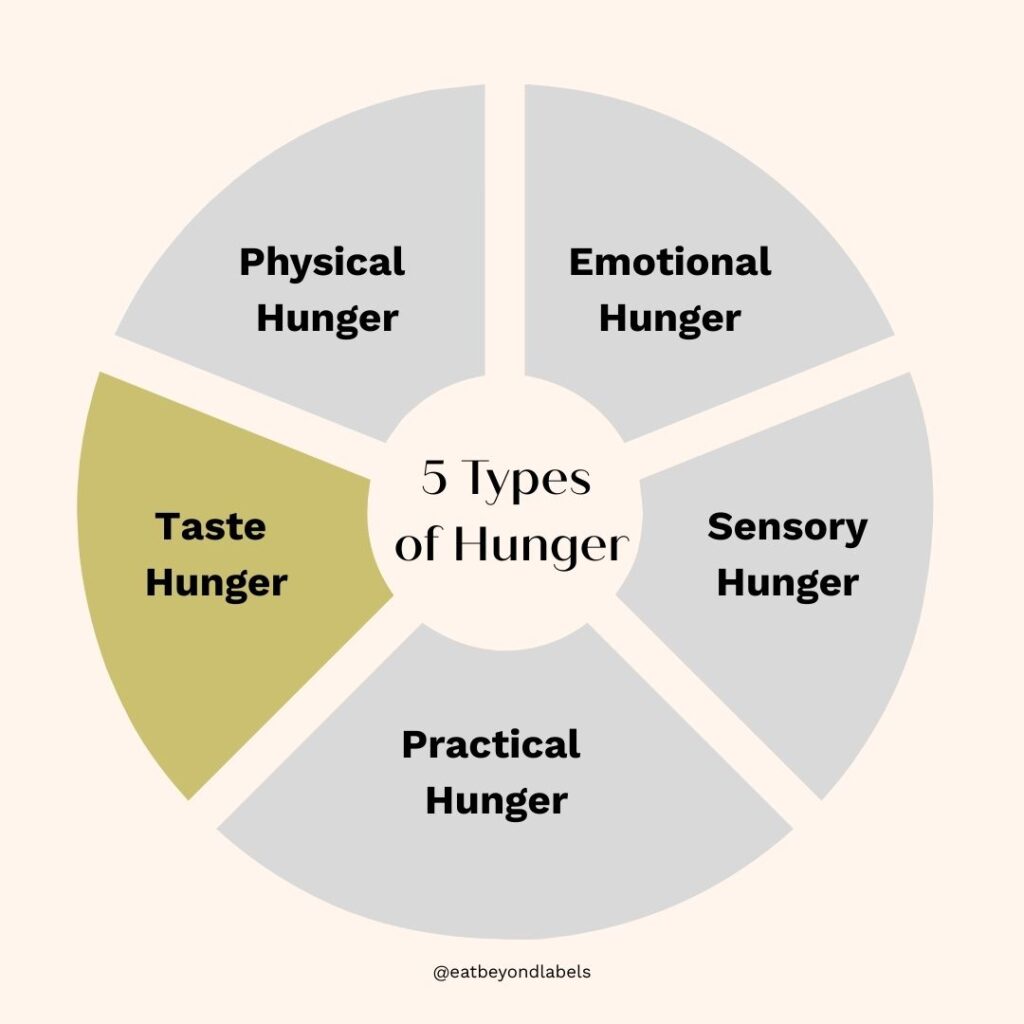
Taste hunger is all about the desire for specific flavors or textures. It’s that craving for something sweet after a meal, or the desire for a mid-afternoon salty snack. Taste hunger is driven by the desire to eat something simply because it tastes good, even when we’re not physically hungry.
Taste hunger may also connect us to our past experiences or communities. Certain foods may remind us of holidays, traditions, or mark the changing of seasons. For example, one might crave a slice of cake at a birthday party, a peppermint candy cane in the wintertime, or a hearty mooncake during Mid-Autumn festival. Foods may carry stories and symbolism, or evoke associations of nostalgia, celebration, and cultural connection. Next time you find yourself craving a particular flavor or texture, take a moment to savor it and make note of the memories or emotions it brings to the surface.
Frequently craving a certain food may indicate an unmet nutritional or emotional need, certain metabolic conditions, or a restrictive mindset around food (our brains tend to fixate on foods we’ve deemed “off limits”). If you’d like help exploring what’s driving your cravings, I offer personalized guidance to explore root causes and identify effective nutrition strategies.
Sensory Hunger
Let’s talk about sensory hunger. This is a type of hunger that’s particularly relevant for neurodivergent individuals, but still applies to all neurotypes. Sensory hunger is often grouped with emotional or taste hunger, but I prefer to view it as its own category.
Generally speaking, sensory hunger tends to have little or no urgency. Sensory hunger is about seeking sensory stimulation through food (TLDR: it’s a way to stim!). It involves eating because you enjoy the feeling of food in your mouth, or perhaps the sensation associated with the food boosts your mood or helps you focus.

In my experience, salty and crunchy foods (like chips) are a common go-to for folks with ADHD to help focus and satisfy sensory hunger. It can be helpful to choose foods that provide the desired sensory input and are also nutritious and satisfying. Just like emotional hunger, it’s important to have multiple tools in your “self-care toolbox.”
Practical Hunger
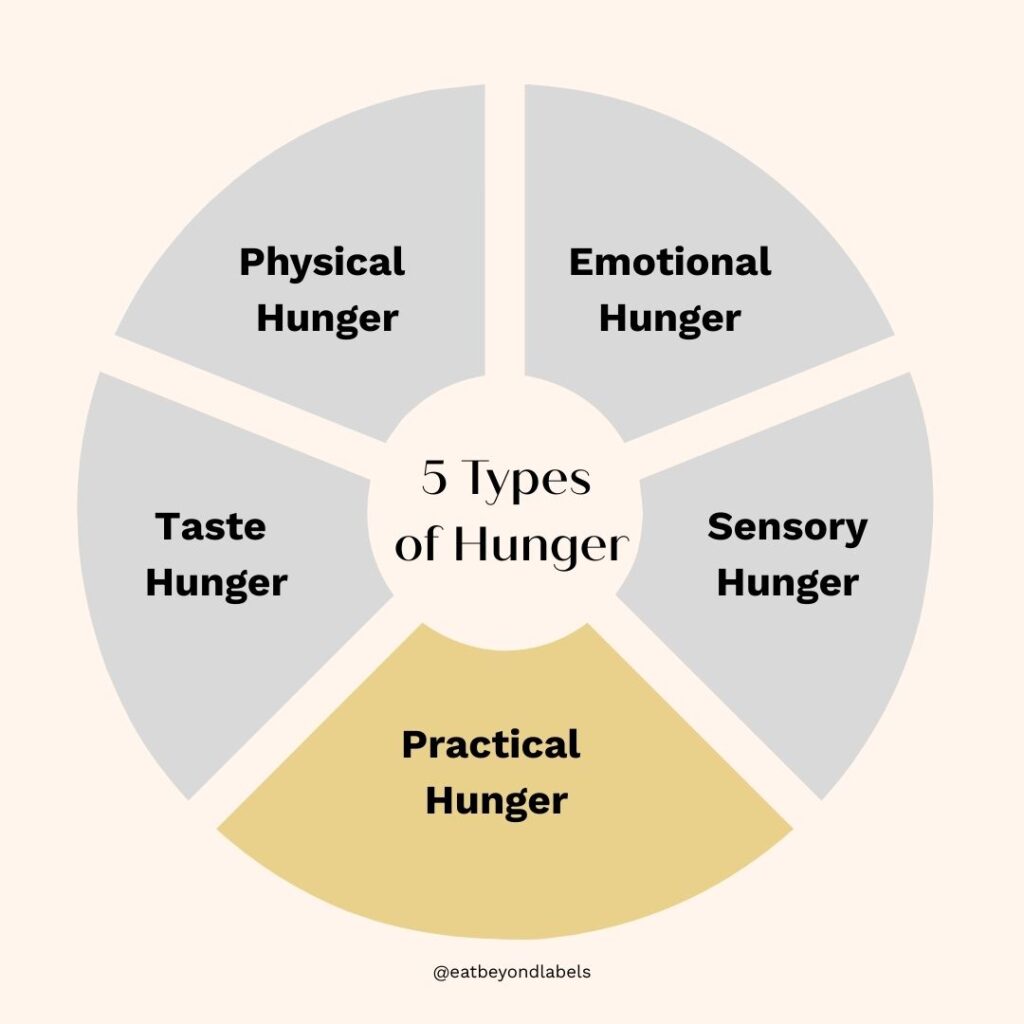
Practical hunger is about eating out of necessity or convenience, and is driven by our schedules and circumstances. Practical hunger helps you prioritize nutritious food that satisfies physical hunger and boosts your energy when you’re on the go.
Honoring practical hunger might look like eating because it’s lunchtime, even though you’re not hungry but need energy for your afternoon workout. It could also mean grabbing a quick snack now because you know you won’t have time to eat later.
Planning meals and snacks in advance can help manage practical hunger. If this doesn’t come easily to you, you’re not alone! If you’re prone to going more than 5-6 hours at a time without eating, forgetting to pack food, or noticing patterns of energy “crashes,” it might be helpful to explore practical hunger strategies with a dietitian specializing in Intuitive Eating.
Try It Out Yourself
Exploring different types of hunger can help us understand our eating habits and develop a healthier relationship with food. These are tools to help us listen to our bodies and minds—rather than dieting or restrictions—to make mindful food choices.
It’s okay to eat for reasons other than physical hunger, and all types of hunger are valid. Eating is an experience that is interconnected with our emotions, experiences, cultures, senses, and schedules. Gently and non-judgmentally exploring your current eating patterns can help reduce guilt and support healthful eating habits.
Next time you find yourself reaching for that bag of chips, take a moment to check in with yourself. Are you physically hungry, or is there something else going on? You might find that identifying the type of hunger that is present can lead to more satisfying, mindful, and intentional eating experiences.

Christy is a Registered Dietitian Nutritionist and Certified Diabetes Care and Education Specialist who is dedicated to support folks with metabolic health and disordered eating recovery. They provide inclusive, evidence-based nutrition support for folks with neurodivergent, LGBTQ+, and multicultural identities. Christy has lived in several Asian countries and speaks conversational Cantonese.


View comments
+ Leave a comment